What is Chairside?
Chairside is a digital workflow in which the restoration is scanned, designed and fabricated beside the patient, inside the clinic. At VolfDent, we add a critical element: an experienced dental technician is on site and works together with the dentist, rather than participating remotely through a scan file.
How does it work?
We bring the equipment to the clinic
VolfDent arrives with the digital workflow equipment required for the case.
Digital scanning
An accurate three-dimensional model of the teeth and treatment area is created with an intraoral scan.
Joint planning
The dentist and technician decide together on shape, contacts, occlusion, material and aesthetics. The restoration is designed in CAD.
Fabrication
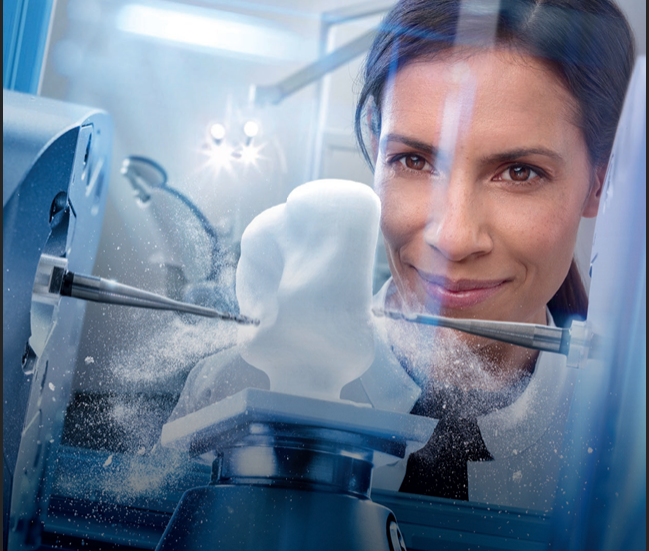
The restoration is milled or ground on site, or produced with another suitable technology according to the type of work.
Finishing and fitting
Shade, glaze, sintering or another finish is applied according to the material, followed by try-in and adjustments.
Delivery in the same visit
Once the dentist approves the restoration and the fit is correct, it is ready for bonding or installation by the dentist. Suitable cases can be completed in about two hours.
How does the dentist benefit?
- A technician beside you in real time — decisions are made with the case in front of you, not after the patient has left.
- Fewer rounds and less coordination — corrections or changes can be made on site.
- Greater control over aesthetics and function — dentist and technician see the same picture together.
- Savings in clinical time — suitable cases avoid an additional visit and a temporary restoration.
- More digital capability for the clinic without turning every dentist into a dental technician.
How does the patient benefit?
- The possibility of completing treatment in one visit instead of returning several times.
- Digital scanning instead of traditional impressions for many cases.
- Less time with a temporary restoration and less waiting between treatment stages.
- Individual adaptation with the ability to assess and refine the result in real time.
Equipment and system
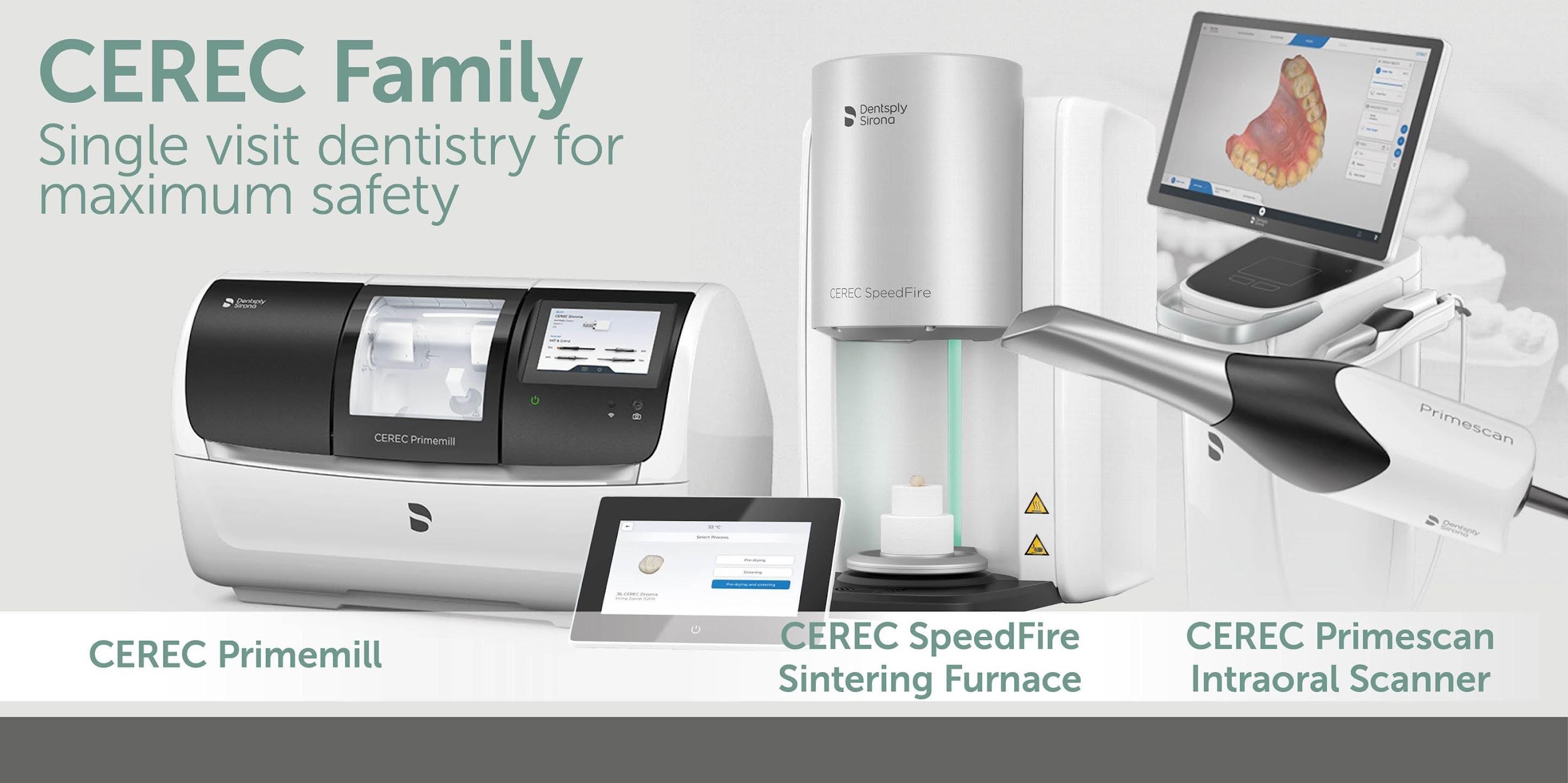
Primescan
Digital intraoral scanning creates an accurate three-dimensional model for restoration design.
Primemill
An advanced dental milling unit for milling and grinding restorations in a range of materials as part of a CAD/CAM workflow.
SpeedFire
A system for rapid sintering and finishing of ceramic restorations, particularly zirconia, within a same-visit workflow.
Primeprint
A 3D-printing system for dental applications such as models, guides and temporary solutions.
Which cases are suitable?
Chairside is particularly suitable for small and medium restorations where speed and real-time control offer a meaningful advantage: anterior and posterior crowns, inlays, onlays, veneers and other selected cases. For more complex work, we may prefer to combine or complete the workflow in the laboratory.
Why does a technician beside the chair change the result?
A good digital system can measure, design and fabricate. But a dental restoration is more than a file. Material selection, anatomy, contacts, occlusion, shade, texture and the decision of when to adjust all require professional experience. When the technician is on site, that expertise enters the process at the moment it has the greatest impact.